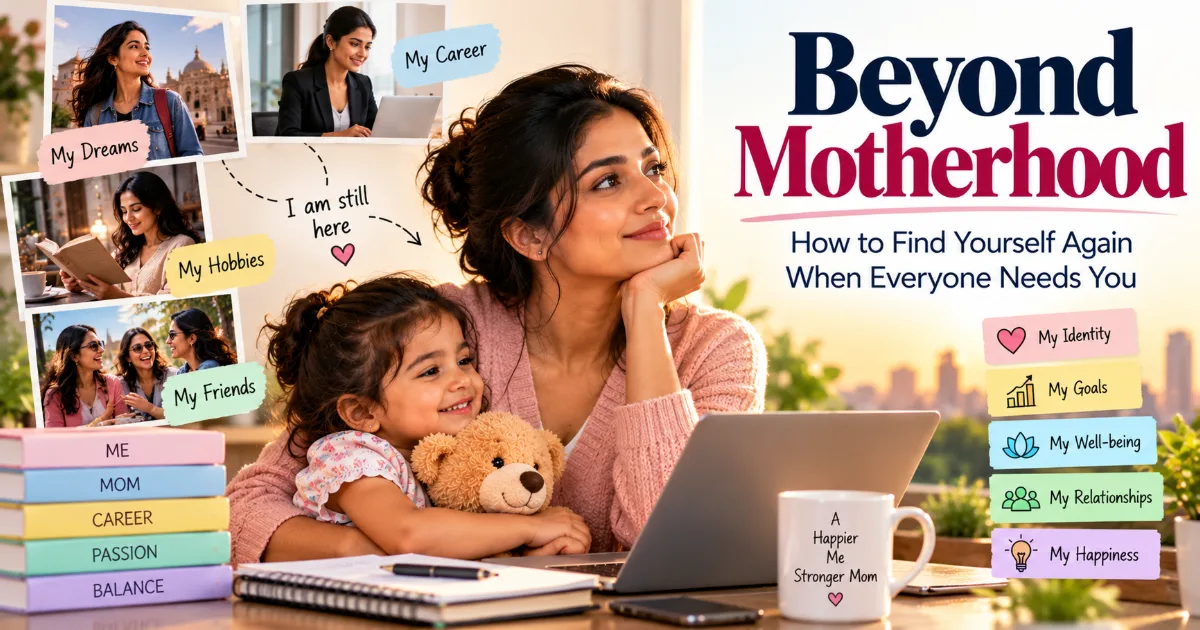
There was a time when you had dreams that belonged only to you. You had interests, ambitions, friendships, hobbies, and plans for the future. You could make decisions based on what you wanted, spend time doing something you enjoyed, and imagine the person you hoped to become. Then motherhood entered your life, bringing love, responsibility, and a completely different understanding of what it means to care for another human being.
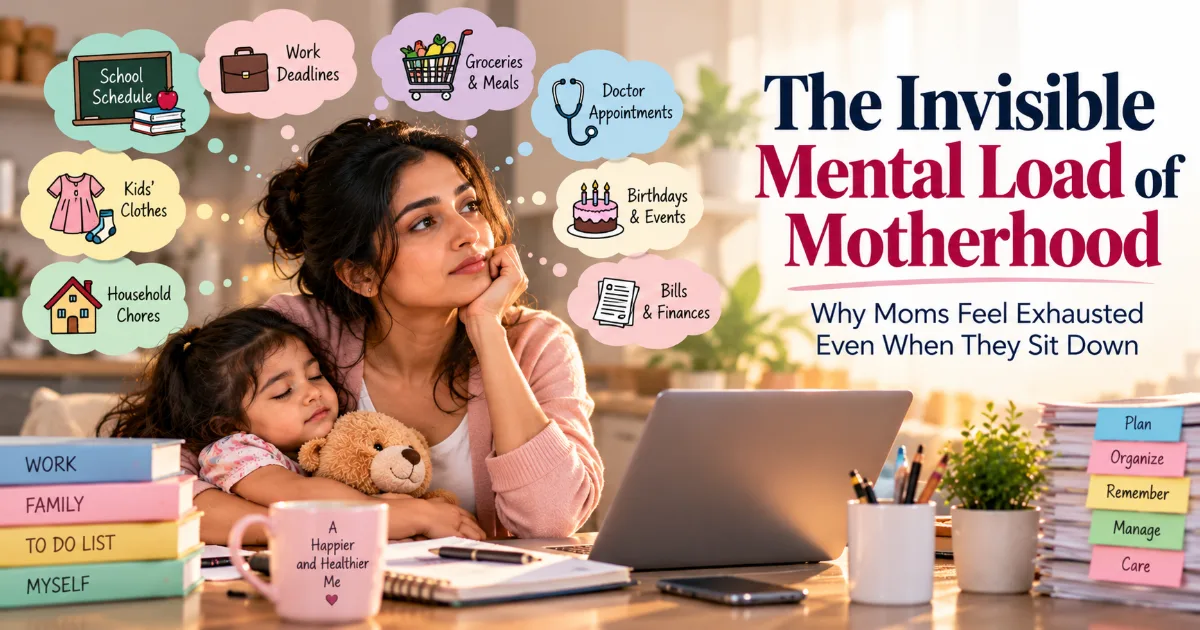
Gradually, your days began revolving around someone else's needs. You started planning meals, managing schedules, remembering appointments, preparing for school, worrying about health, and making countless small decisions that kept your family functioning. Your own needs often moved to the bottom of the list because someone else always seemed to need your attention first.
You may still love your family more than words can express, but sometimes you wonder where the woman you used to be has gone. You may miss the freedom to spend an afternoon reading, the excitement of pursuing a professional goal, the friendships that once came naturally, or the simple pleasure of making a decision without considering how it would affect everyone else.
If you have experienced these feelings, you are not alone. Motherhood can transform your identity, and adjusting to those changes can be complicated. Loving your children does not mean you will never miss your old life, and feeling a desire for personal freedom does not mean you regret becoming a mother.
You can be grateful for your family and still want more space for yourself. You can love being a mother while rediscovering the woman who existed before motherhood. These feelings can coexist, and acknowledging them is an important step towards building a life in which your own identity continues to matter.
Continue Reading
When Your Identity Becomes Defined by Motherhood
One of the biggest changes many women experience after becoming mothers is the way other people perceive them. Before having children, people may have known you through your profession, talents, interests, achievements, or personality. After motherhood, conversations can begin to revolve almost entirely around your child.
People ask how the baby is sleeping, whether your child is eating properly, how school is going, or whether you plan to have another child. These questions may come from genuine affection, but when nearly every conversation focuses on your role as a mother, your individual identity can begin to feel invisible.
You may notice that you introduce yourself primarily through your children's activities and achievements. Your calendar becomes a record of school events, family appointments, and household responsibilities. Your personal goals remain somewhere in the background, waiting for a convenient moment that rarely arrives.
This change does not happen because motherhood is unimportant. It happens because motherhood can occupy so much time and emotional energy that other parts of your identity receive very little attention.
A woman can be a devoted mother while also being a professional, a friend, a creator, a learner, an entrepreneur, or someone who simply enjoys quiet time alone. These identities do not compete with one another. They contribute to the person you are.
You do not have to choose between acknowledging the importance of motherhood and recognizing your individuality. Both deserve space in your life.
Why You May Feel Guilty About Wanting Time for Yourself
Many mothers struggle with guilt when they consider spending time on their own interests. They may feel that every available hour should be used to support their children or maintain the household. Even when someone offers to take care of the children, a mother may find herself using that time to complete chores rather than doing something she genuinely enjoys.
This guilt can come from several sources. Some women grow up believing that a good mother must always put her children first. Others feel pressure from relatives, social media, or cultural expectations that present self-sacrifice as the ultimate expression of maternal love.
Over time, a mother may begin to believe that her own happiness is less important than everyone else's comfort. She may postpone meeting friends, stop exercising, abandon hobbies, or avoid professional opportunities because she feels that taking time for herself is selfish.
But personal time is not a reward that you must earn by completing every responsibility. It is a legitimate part of a healthy life.
Your children need care and attention, but they do not need you to erase every aspect of your individuality. They need a loving and dependable parent, not a person who never rests, never pursues an interest, and never acknowledges her own needs.
Taking an hour to read, exercise, learn something new, or meet a friend does not diminish your love for your family. It gives you an opportunity to reconnect with yourself and experience parts of life that are meaningful beyond your responsibilities.
The next time you feel guilty about wanting time alone, ask yourself whether you would judge another person so harshly for having the same need. You may discover that the expectations you place on yourself are far more demanding than those you would place on someone you love.
Remember the Things You Enjoyed Before Motherhood
When life becomes busy, personal interests are often among the first things to disappear. You may stop reading because evenings are occupied by household tasks. You may abandon painting, dancing, writing, gardening, or photography because there never seems to be enough uninterrupted time. You may stop meeting friends because organizing an outing feels more complicated than staying home.
Over time, you can become so accustomed to putting these activities aside that you forget how much happiness they once brought you.
Rediscovering yourself does not require a dramatic life change. You can begin by remembering the activities that made you feel curious, creative, peaceful, or excited before motherhood became your primary responsibility.
Think about what you enjoyed doing when nobody was evaluating your performance or expecting you to produce a result. Perhaps you loved reading novels, listening to music, exploring new places, learning languages, cooking something unusual, or spending time outdoors.
Choose one activity that still appeals to you and find a realistic way to bring it back into your routine. You might read for fifteen minutes before bed, spend a little time drawing on weekends, or listen to a favorite podcast during a walk.
Do not turn your hobby into another responsibility that requires perfect consistency. The purpose is not to become exceptionally good at something or to prove that you can manage another task. The purpose is to experience enjoyment without needing to justify it.
You may discover that your interests have changed since becoming a mother. That is perfectly normal. You do not need to recreate your previous identity exactly as it was. You can explore new interests and discover parts of yourself that have developed through your experiences.
Rebuilding Your Professional Identity
For mothers who have taken a career break or reduced their working hours, the loss of professional identity can be particularly difficult. Work may have provided more than an income. It may have offered intellectual stimulation, social interaction, recognition, independence, and a sense of achievement.
When those experiences become less frequent, you may begin to question your abilities or feel disconnected from the professional world. You might see former colleagues progressing in their careers and wonder whether you have fallen too far behind to return.
These concerns deserve understanding, but they do not mean that your professional future has ended.
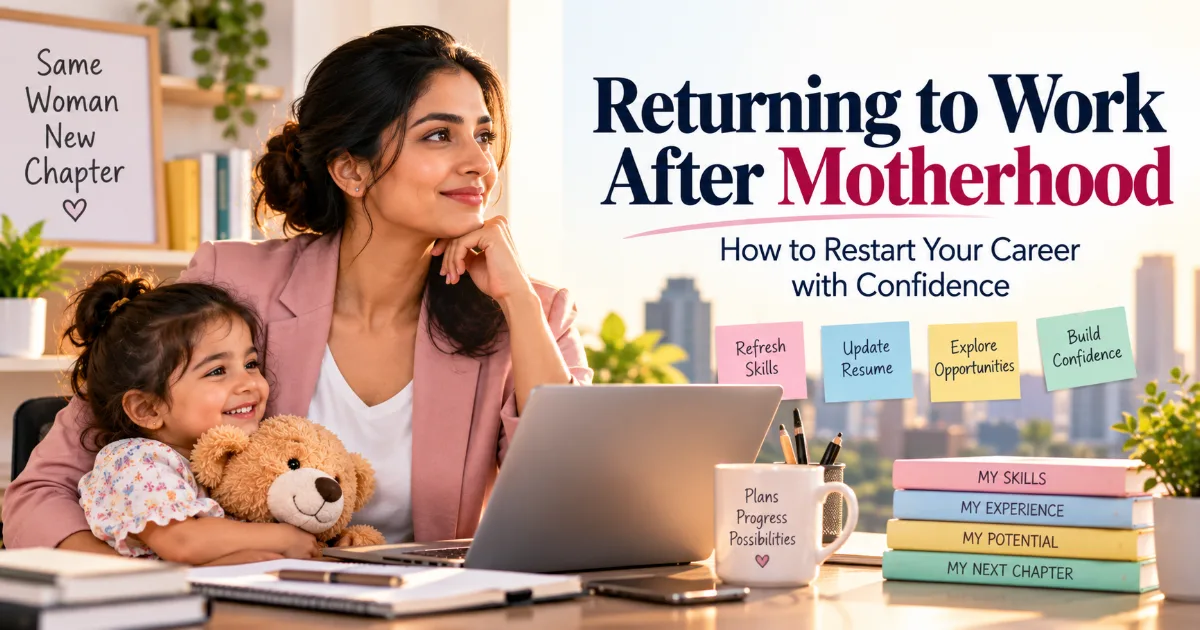
If you want to return to work, begin by exploring what that would look like under your current circumstances. You may decide to refresh your skills, complete a course, reconnect with former colleagues, or investigate opportunities in your industry.
If full-time employment is not practical at the moment, you might consider part-time work, freelancing, consulting, or a small project that allows you to use your existing abilities. The right option depends on your goals, finances, available support, and personal preferences.
You can also maintain a professional identity even when you are not employed. Reading industry updates, participating in professional discussions, learning new skills, and developing personal projects can help you remain connected to your interests.
However, remember that returning to work is not a requirement for proving that you still have an identity beyond motherhood. Some women genuinely prefer to focus on family life during particular stages, while others need or want to continue building their careers. Both choices deserve respect.
The important thing is that your decision reflects your own priorities rather than the belief that you must follow a particular path to be considered successful.
Your Friendships Matter Too
Friendships can change significantly after motherhood. Conversations that once involved spontaneous plans, professional ambitions, travel, relationships, or shared hobbies may become less frequent as schedules become more complicated.
You may find it difficult to coordinate meetings around childcare, school routines, work commitments, and family responsibilities. Friends without children may not fully understand why you cannot make last-minute plans, while other mothers may be equally overwhelmed by their own schedules.
As time passes, you might realize that weeks have gone by without a meaningful conversation with someone who knows you outside your family role.
Friendships provide a different kind of connection from family relationships. They can give you space to discuss your interests, laugh about everyday experiences, exchange ideas, and feel understood as an individual.
Maintaining friendships does not require elaborate outings or expensive activities. A phone call, a shared walk, a brief coffee meeting, or a thoughtful message can help keep a relationship alive.
You may also need to accept that some friendships will change. People move through different stages of life, and not every relationship will remain as close as it once was. You can appreciate those relationships while creating opportunities to meet people whose interests and circumstances connect with your current life.
Do not wait until your schedule becomes completely free before reaching out. That moment may never arrive. Instead, make small and realistic efforts to maintain the relationships that matter to you.
You deserve conversations in which you are more than someone's mother, someone's partner, or the person responsible for organizing the family.
Stop Measuring Your Worth by How Much You Do for Others
Many mothers become accustomed to measuring their days by how many responsibilities they complete. If the children are fed, the house is organized, the meals are prepared, and the work is finished, the day feels successful. If something remains undone, they may feel that they have failed.
This way of thinking can make it difficult to recognize personal worth outside productivity.
A mother may spend an entire day caring for her family and still feel dissatisfied because the laundry remains unfinished. She may complete an important professional project but feel guilty because she ordered dinner instead of cooking. She may finally take a break and then spend the entire time thinking about what she should be doing.
The problem is not that these responsibilities lack importance. The problem is believing that your value depends on completing all of them.
Your worth is not determined by how clean your home is, how many meals you prepare, how quickly you respond to messages, or how efficiently you organize your children's schedules.
You are allowed to have an ordinary day in which very little gets accomplished. You are allowed to rest when tasks remain unfinished. You are allowed to make choices that prioritize your well-being rather than maximizing productivity.
Try to notice moments when you are evaluating yourself only through your output. Ask whether a task genuinely needs to be completed immediately or whether you are responding to an expectation that could be reconsidered.
A more balanced understanding of success includes relationships, personal growth, emotional well-being, meaningful experiences, and the ability to enjoy your own life.
Learn to Set Boundaries Without Feeling Selfish
Rediscovering yourself often requires establishing boundaries around your time, energy, and responsibilities. This can be difficult when family members are accustomed to your constant availability.
You may be the person everyone contacts when they need something organized, remembered, purchased, prepared, or resolved. Even when you are busy, you may feel pressure to respond immediately because you are used to being dependable.
However, being dependable does not mean being available every moment.
Boundaries can begin with small changes. You might decide that a particular period in the evening is reserved for personal time, that nonurgent household tasks can wait until the weekend, or that other family members must take responsibility for specific recurring activities.
If you have a partner, discuss how household responsibilities can be distributed more fairly. Instead of asking for occasional help, work towards an arrangement in which both adults take ownership of the responsibilities they manage.
You can also learn to decline requests that exceed your available time. You do not need to provide a lengthy explanation every time you cannot attend an event, take on an additional responsibility, or solve someone else's problem.
Setting boundaries may feel uncomfortable at first, especially if you have spent years prioritizing other people's needs. Some people may need time to adjust to the change. That discomfort does not automatically mean that your decision is wrong.
Healthy boundaries help protect the time and energy you need to care for yourself and your family without becoming overwhelmed.
Build a Relationship With the Person You Are Becoming
Sometimes, mothers focus so much on recovering their previous identity that they forget they have also changed through their experiences.
You may no longer want the same career, friendships, hobbies, or lifestyle that appealed to you before having children. Your priorities may be different, your ambitions may have evolved, and your understanding of happiness may have become more complex.
Instead of asking how to become the woman you used to be, consider asking what kind of person you want to become now.
Perhaps you want to develop greater financial independence, explore a creative interest, build a business, strengthen your health, learn something new, or create more meaningful relationships. Perhaps you simply want a life that feels less rushed and more connected to your values.
Give yourself permission to explore these possibilities without demanding immediate answers.
You can experiment with new routines, try activities that interest you, and reconsider commitments that no longer serve you. Some experiments will work, while others will not. Both outcomes can help you understand yourself better.
Personal growth does not always involve a major achievement. It can mean becoming more comfortable expressing your needs, making decisions with greater confidence, or recognizing when you need support.
Motherhood may have changed your life, but your identity remains capable of developing. You are not required to remain exactly the same person you were before becoming a parent, nor are you required to define every part of your future through your children.
You are allowed to continue discovering yourself.
You Can Be a Good Mother Without Losing Yourself
One of the most important things to remember is that your individuality and your commitment to your children are not opposing forces.
Your children can benefit from seeing you pursue meaningful interests, maintain friendships, continue learning, and take responsibility for your own well-being. They can learn that caring for others is important while also understanding that every person has needs and aspirations.
You do not have to hide your ambitions to make your children feel loved. You do not have to abandon your interests to demonstrate commitment to your family. You do not have to feel guilty every time you make a decision that gives you joy.
There will be seasons when your children need more of your attention, and there will be seasons when you have greater opportunities to focus on yourself. The balance may change repeatedly as your family grows and circumstances evolve.
What matters is creating a life in which your needs are not permanently postponed.
You can be a loving mother who also enjoys a successful career. You can be a stay-at-home mother who pursues creative interests. You can be a mother who loves travelling, reading, building friendships, learning new skills, or spending quiet time alone.
There is no single definition of a fulfilled woman, and there is no single way to experience motherhood.
Your life belongs to you as well as to the people you love.
Conclusion
Motherhood can be one of the most meaningful parts of a woman's life, but it should not require her to abandon every other part of herself. The transition into motherhood can change your routines, relationships, ambitions, and priorities, yet your individuality remains important.
If you have begun to feel invisible beneath your responsibilities, start by acknowledging that feeling without judging yourself. Think about the interests you have neglected, the relationships you miss, the goals you still want to pursue, and the changes that could make your everyday life more fulfilling.
You do not need to transform your entire life overnight. Begin with a small activity that belongs to you. Reconnect with a friend, spend time learning something interesting, explore a professional opportunity, or ask your family to share responsibilities more fairly.
Give yourself permission to make choices that support your well-being. Allow your ambitions to evolve. Recognize that rest is necessary, personal interests matter, and your value extends beyond the services you provide to other people.
You were a complete individual before becoming a mother, and you remain a complete individual today. Motherhood has added another dimension to your life, but it has not erased your personality, your dreams, or your right to grow.
Your children deserve a mother who feels loved and supported. You deserve to experience that same love and support yourself.
Do not wait until every responsibility is complete before making space for your own life. Begin where you are, with whatever time and resources you have, and continue building a future in which motherhood and individuality can exist together.
#MomAndCareer #Motherhood #MothersMatter #SelfIdentity #WorkingMoms