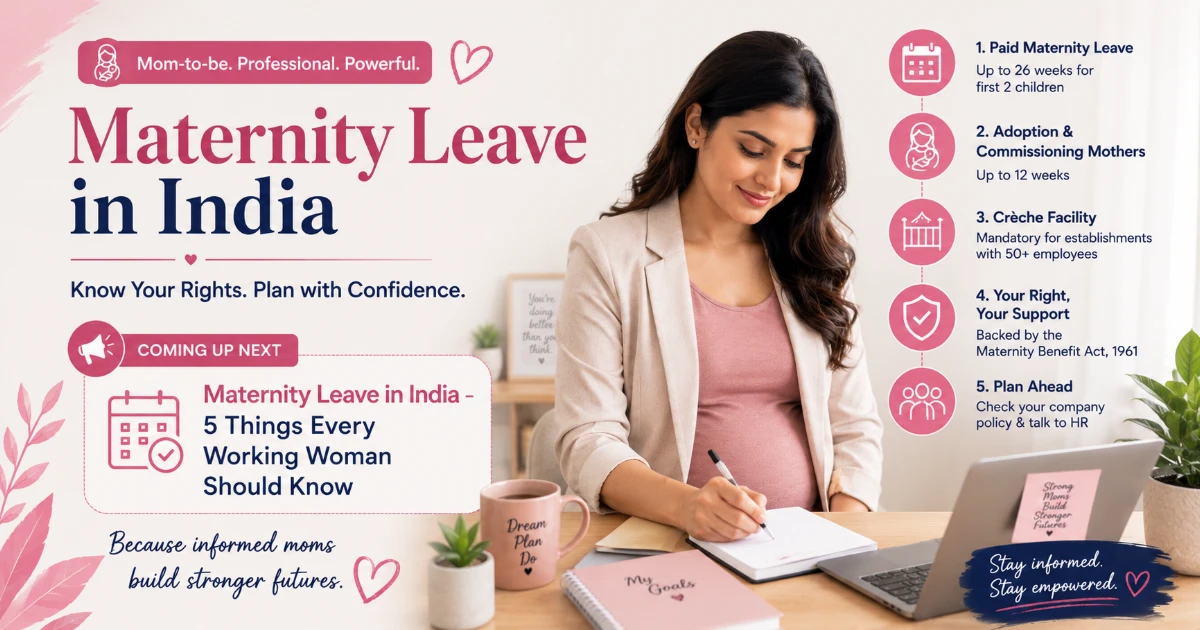

Motherhood changes the way a woman thinks about money. Before becoming a mother, she may have focused on building her career, saving for personal goals, investing in her future, or enjoying the financial freedom that comes from earning her own income.
After having children, financial priorities often change. Household expenses increase, childcare becomes an important consideration, education planning begins, and family responsibilities take up a larger part of the financial picture.
For many mothers, personal financial goals gradually move into the background. A woman who once earned her own salary may decide to take a career break to raise her children. Another may reduce her working hours to manage family responsibilities. Some women continue working full-time but contribute most of their earnings towards household expenses, childcare, education, and other family needs. Stay-at-home mothers may depend on their partners for everyday financial decisions, even when they contribute significantly through unpaid household and caregiving work.
In these situations, an important question deserves attention: Does every mother have financial security of her own?
Financial independence is not about competing with a partner, keeping secrets, or refusing to share family responsibilities. It is about having the knowledge, confidence, resources, and decision-making ability to participate in financial matters and protect your future. It means understanding your household finances, maintaining access to money, planning for emergencies, and having the freedom to make informed choices.
Continue Reading
A mother should not have to wait until she returns to work, receives a promotion, or starts earning a large salary before thinking about financial security. Whether she is employed, self-employed, taking a career break, or managing a household full-time, her financial future matters.
Why Financial Independence Matters After Motherhood
One of the biggest misconceptions about financial independence is that it is relevant only to women who earn a salary. In reality, financial independence involves much more than employment. It includes financial awareness, access to resources, savings, investments, insurance, and the ability to participate in decisions that affect your future.
A stay-at-home mother may not receive a monthly salary, but her contribution to the household has significant economic value. Childcare, cooking, managing the home, coordinating family schedules, and supporting other family members are essential responsibilities. If these services had to be outsourced, they could involve considerable expenses.
Unfortunately, unpaid work is not always reflected in household financial arrangements. A woman may spend years managing her family's needs without building savings or assets in her own name. If she later wants to return to work, she may discover that she has limited financial resources to support the transition.
Financial independence helps address this vulnerability. It gives mothers an opportunity to understand their financial position, plan for different stages of life, and avoid depending entirely on another person's decisions.
It also creates confidence. Knowing how much money your family earns, what it spends, which loans are outstanding, what insurance policies exist, and how investments are managed can make you a more informed participant in family decisions.
Financial independence should be viewed as an important part of personal security, not as a sign of distrust within a marriage.
Your Own Bank Account Is an Important Starting Point
One practical step towards financial independence is maintaining a bank account that you can access and manage independently.
Some women have their own accounts but rarely use them after marriage or motherhood. Others operate only through joint accounts or accounts managed by their partners. While joint accounts can be useful for household expenses and shared financial goals, having an individual account can provide additional flexibility and financial visibility.
An individual account allows you to receive your income, maintain personal savings, manage your own transactions, and keep track of money allocated to your individual needs.
For mothers who are currently not earning, discussing a regular personal savings allocation within the household budget can be useful. This should not be treated as an unnecessary personal expense. It is part of recognizing that a homemaker also has financial needs and deserves access to resources.
If you are employed, consider directing a portion of your salary towards personal savings before spending on discretionary purchases. If you are self-employed, establish a consistent system for separating business income, household contributions, taxes, and personal savings.
Having an account is only the beginning. It is equally important to understand how it works, protect your banking credentials, monitor transactions, and know how to access your money when needed.
Build an Emergency Fund for Yourself and Your Family
An emergency fund is one of the most useful financial protections a household can have. Unexpected medical expenses, job losses, home repairs, family emergencies, or temporary income disruptions can create financial pressure.
Without savings, families may have to depend on loans, credit cards, or assistance from relatives during difficult situations. An emergency fund provides a financial cushion that can help manage unexpected expenses without immediately disturbing long-term investments.
A practical starting goal is to save enough to cover three to six months of essential household expenses, depending on income stability, family responsibilities, insurance coverage, and other financial circumstances. Families with irregular income or significant caregiving responsibilities may need a larger reserve.
Begin with a manageable amount rather than waiting until you can save a large sum. Regular contributions, even when small, can gradually build a useful financial reserve.
Emergency savings should generally remain accessible and be held in relatively low-risk, liquid options. Money required for emergencies should not be exposed to significant market fluctuations or locked into investments that are difficult to withdraw.
Mothers should also understand where emergency funds are held and how they can access them. Financial security is not meaningful if you know savings exist but cannot access them when necessary.
Do Not Ignore Retirement Planning
Many mothers focus heavily on their children's future while postponing their own retirement planning. They may prioritize school fees, extracurricular activities, higher education, family holidays, and household purchases while assuming that retirement can be addressed later.
This can become a serious financial challenge, particularly for women who take career breaks or spend extended periods outside paid employment.
Retirement planning is important because financial responsibilities do not necessarily disappear when children become independent. Women may live for many years after leaving employment, and they need resources to support healthcare, housing, daily expenses, and personal interests.
If you are employed, understand the retirement benefits available through your workplace and consider whether additional long-term savings are required. If you are self-employed or managing a household, explore suitable retirement-oriented savings and investment options based on your circumstances.
In India, women may encounter different financial products depending on their employment status and eligibility. These may include the Employees' Provident Fund for eligible employees, the National Pension System, Public Provident Fund, and other regulated investment options. Each has different rules, tax treatment, liquidity conditions, and risk characteristics, so understand the details before investing.
Starting early can make a significant difference because long-term savings have more time to grow. However, if you are starting later, do not assume that planning is pointless. Even a modest and consistent contribution can improve your financial position over time.
Your children's education is important, but your retirement should not depend entirely on their future income or willingness to support you.
Understand the Difference Between Saving and Investing
Saving and investing are both important, but they serve different purposes.
Savings generally provide liquidity and help you manage short-term goals and emergencies. Investments are intended to help build wealth over time, although their value may rise or fall depending on the asset and market conditions.
A mother who wants to become financially secure should understand the difference rather than keeping all her money in a single type of financial product.
For short-term requirements, accessible savings and relatively low-risk options may be more appropriate. For long-term goals, diversified investments may help manage inflation and build wealth, depending on your risk tolerance and investment horizon.
Some women avoid investing because they believe financial markets are too complicated. Others depend entirely on a partner or relative to make investment decisions. Both situations can leave them without sufficient understanding of their own financial future.
You do not need to become a professional investor. Start by learning basic concepts such as inflation, compound growth, diversification, risk, liquidity, and investment costs.
Before investing, understand what you are buying, how returns are generated, what risks are involved, and when you can access the money. Avoid making financial decisions based only on social media recommendations, unrealistic return promises, or pressure from acquaintances.
Financial knowledge helps you ask better questions and make more informed decisions.
Protect Yourself With the Right Insurance
Insurance is an important part of financial planning, particularly for mothers who have children or dependents.
Health insurance can help protect family savings from significant medical expenses. Life insurance may provide financial protection to dependents if the insured person dies. Other forms of protection may be relevant depending on employment, health, property, and family circumstances.
One common mistake is assuming that only the primary earning member needs life insurance. A non-earning mother also provides valuable services through childcare, household management, and family support. If she is no longer available, the family may face additional childcare and household expenses.
Insurance planning should consider the financial impact of losing either parent's contribution, whether that contribution is earned income or unpaid caregiving work.
If you are the primary earning member, calculate how much financial support your family would need if your income disappeared. If you are a homemaker, consider the economic value of the services you provide when evaluating your family's protection needs.
Read policy documents carefully. Understand exclusions, waiting periods, coverage limits, premium obligations, claim procedures, and the difference between insurance and investment products.
The objective is not to purchase every available policy. It is to identify genuine financial risks and select suitable protection.
Returning to Work Can Strengthen Your Financial Future
For mothers who have taken a career break, returning to employment can be an important step towards rebuilding financial independence.
However, returning to work should not be viewed only as a way to earn money. It can also provide professional identity, confidence, opportunities for learning, and access to employment-related benefits.
If you are planning to restart your career, begin by evaluating your existing skills and the opportunities available in your industry. You may need to refresh your knowledge, update your resume, complete professional training, or reconnect with former colleagues.
Consider different employment arrangements. Full-time work, part-time employment, freelancing, consulting, remote work, and entrepreneurship may offer different levels of income and flexibility.
Do not assume that your first job after motherhood must match your previous salary or professional position. You may need time to rebuild experience and establish a suitable routine. However, do not underestimate your qualifications simply because you have taken a break.
When evaluating an opportunity, consider the actual financial benefit after childcare, transportation, work-related expenses, taxes, and other costs. A lower-paying flexible role may be appropriate in some circumstances, while a higher-paying position may make more sense in others.
Your career decisions should support your long-term financial goals as well as your family's practical needs.
Stay-at-Home Mothers Also Deserve Financial Security
Financial independence is particularly important for mothers who are not currently employed.
A woman who manages her household full-time may have no regular personal income, even though her work supports the earning capacity and well-being of other family members.
This can create financial dependence if all accounts, investments, assets, and major financial decisions are controlled by another person.
A healthy financial arrangement should recognize the contributions of both partners. Household budgeting should include personal savings for the non-earning partner, retirement planning, adequate insurance, and access to information about family assets and liabilities.
Couples can discuss an agreed monthly allocation for personal expenses and savings. They can also maintain shared financial goals while ensuring that both partners understand the household's financial position.
If one partner has taken a career break for childcare, the couple should consider how this affects long-term savings and retirement contributions. A career break may reduce salary growth, retirement accumulation, and future earning opportunities. These effects should be included in family financial planning.
A homemaker should not have to request permission for every ordinary personal expense or remain unaware of the family's financial commitments.
Financial security is a shared responsibility, and unpaid caregiving should be recognized as a meaningful contribution to the household.
Teach Your Children About Money
Financial independence is not only about protecting your own future. It is also an opportunity to teach children healthy financial habits.
Children observe how parents make decisions about spending, saving, borrowing, and planning. Their understanding of money often develops through everyday family experiences.
Start with simple lessons appropriate to their age. Younger children can learn that money is limited and that different purchases have different priorities. Older children can begin understanding budgeting, saving for goals, comparing prices, and distinguishing between needs and wants.
Teenagers can gradually learn about bank accounts, digital payments, responsible credit use, online scams, and the importance of protecting financial information.
Encourage children to understand that money is a tool for meeting needs, creating opportunities, and managing responsibilities. It should not become the only measure of personal success.
Mothers can also teach daughters that financial independence is a life skill, not something that becomes relevant only after marriage or employment.
Teach sons that financial responsibilities within a household should be shared and that unpaid caregiving has real value.
When children grow up seeing both parents participate in financial decisions, they are more likely to understand that money management is a shared family responsibility.
Understand Your Family's Financial Position
Every mother should have a basic understanding of her family's financial situation.
This includes knowing the approximate household income, recurring expenses, outstanding loans, insurance coverage, savings, investments, and major financial commitments.
You should also know where important financial documents are stored and how to access them when necessary.
Many families divide responsibilities in a way that leaves one partner managing all financial matters. Although this may appear convenient, it can create problems if the person handling finances becomes unavailable.
Both partners should understand major financial accounts, loan obligations, insurance policies, property documents, and emergency arrangements.
Create a household budget that identifies essential expenses, discretionary spending, savings, and long-term goals. Review it periodically, especially when income or family circumstances change.
You do not need to monitor every transaction obsessively. The objective is to remain informed and participate meaningfully in decisions that affect your household.
Financial awareness also helps you identify unnecessary expenses, avoid excessive borrowing, and make better choices when major purchases arise.
Beware of Financial Scams and Dependency
Financial vulnerability can increase when a person has limited knowledge of banking, investments, digital payments, or financial documentation.
Mothers who have been away from employment may not always have had opportunities to develop these skills. Some may also depend on relatives or acquaintances who claim to understand financial products better.
Never share banking passwords, one-time passwords, PINs, or confidential authentication details. Be cautious of investment schemes promising guaranteed high returns, unsolicited loan offers, suspicious payment requests, and messages that create urgency.
Verify financial institutions, advisors, and investment platforms before transferring money. Read the terms of financial products and avoid signing documents you do not understand.
Be particularly careful about investments made in someone else's name without understanding ownership, access rights, or legal implications.
If you are uncertain about a major financial decision, consider consulting a qualified and appropriately regulated financial professional.
Financial awareness is not about becoming suspicious of everyone. It is about understanding your rights, protecting your resources, and making decisions with sufficient information.
Start With a Simple Financial Independence Plan
You do not need a large income or a complicated investment portfolio to begin improving your financial position.
Start by understanding your current situation. Identify your available savings, income sources, monthly expenses, debts, insurance coverage, and financial responsibilities.
Set realistic goals for the next twelve months. These might include establishing an individual bank account, building an emergency fund, completing a financial literacy course, reviewing insurance coverage, or beginning a regular retirement contribution.
If you are currently not earning, discuss a suitable personal savings arrangement with your partner. If you are employed, decide how much of your income can be allocated to personal savings and long-term investments after essential expenses.
Review your progress periodically. Your financial plan should evolve as your children grow, your employment situation changes, and your family responsibilities develop.
Avoid comparing your financial position with people who have different incomes, assets, or family circumstances. Financial independence is a journey, and the most useful progress is the progress you make towards your own goals.
Conclusion
Motherhood brings many responsibilities, but it should not mean giving up your financial identity or security.
Whether you are a working mother, a homemaker, an entrepreneur, or a woman returning to work after a career break, your financial future deserves attention. Having access to money, understanding your family's finances, building savings, planning for retirement, and protecting yourself through appropriate insurance are important steps towards greater security.
Financial independence does not mean that you must manage every responsibility alone. It means that you should have the knowledge and resources to participate in decisions, protect your interests, and make informed choices about your future.
Do not postpone financial planning until your children grow up or your career becomes more stable. Begin with small, practical steps today. Learn how your money works, understand your rights, build savings according to your circumstances, and make sure your contribution to family life is recognized.
Your children need a secure future, but you deserve one too. Your partner's financial success should not be the only foundation of your security, and your years of caregiving should not leave you without resources of your own.
A financially informed mother can make better decisions for herself and her family. She can plan with confidence, face unexpected situations with greater preparedness, and pursue opportunities without feeling completely dependent on someone else's financial decisions.
Every mother deserves love, respect, recognition, and financial security. Your future matters just as much as the future you are building for your children.
#MomAndCareer #FinancialIndependence